
Backcountry fly fishing in Idaho trades famous rivers and drift boats for pocket water, trail miles and trout that may never see a fly all summer. This guide covers the best season, compact gear, productive fly patterns, safe small-stream tactics and five remote waters worth exploring.
Some of Idaho’s most talked-about fisheries are also its biggest. The Snake and Salmon rivers loom large in the state’s fly-fishing lore, but they can be intimidating: deep in places, difficult to explore in a weekend and often best navigated by boat.
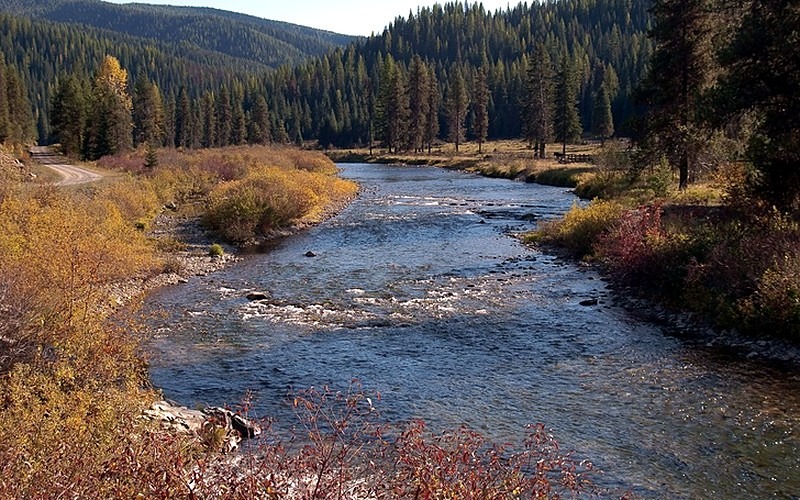
Small streams offer a different kind of adventure. A short rod, a light pack and a willingness to walk can put you on cold, clear water far from the nearest road. These landscapes are wild, but not “untouched.” They have long human histories and remain affected by fire, grazing, recreation and changing water temperatures.
The trout are not always giants. Eight- to 10-inch fish are common, with native cutthroat and redband rainbow trout in many drainages. Wild brook trout also occur in some streams, but brook trout are not native to Idaho. Larger bull trout are possible in connected cold-water systems, and every Idaho bull trout must be released.
Small-Stream Fly Fishing Tips for Idaho
Best Season for Idaho Backcountry Streams
July through September is the most reliable window in a typical year. High-country access and stream flows vary with snowpack, runoff, wildfire and seasonal road conditions, so a calendar date is never a guarantee. Check current trail, road, fire and stream conditions before leaving.
Early summer can mean cold, swollen water and difficult crossings. Later in the season, low flows and warm afternoons can stress trout. Carry a thermometer, handle fish quickly and move to colder water or stop fishing if temperatures become unsafe.
Rod, Leader and Backcountry Gear
A 3- or 4-weight rod handles most small-stream trout. A rod between about 7 and 8½ feet is easier to cast beneath branches than a long river rod, and a four-piece model packs well. A 7½- to 9-foot leader tapered to 4X or 5X is a practical starting point, adjusted for fly size, water clarity and cover.
Choose light but dependable boots, layers, rain protection, water treatment and an emergency kit. For overnight trips, add shelter, food storage appropriate for bear country and a paper map backed up by offline navigation. Tell someone your route and return time. Ultralight gear is useful only when it still keeps you safe.
Productive Flies for Small Idaho Streams
Remote trout are often opportunistic, so a compact fly box works. Start with buoyant attractor dries such as a Chubby Chernobyl, PMX, Royal Wulff or Hippie Stomper. Add Parachute Adams, Blue-Winged Olive and Pale Morning Dun imitations, Elk Hair Caddis, ants, beetles and small hoppers.
Carry a few Pheasant Tail, Hare’s Ear, Prince and Zebra Midge nymphs, plus one or two small streamers. Sizes 10 to 16 cover many dry-fly situations, but fly size should follow the insects, water level and fish rather than a blanket rule to “downsize.” A dry-dropper rig is useful when pocket-water trout will not rise.
For a broader regional breakdown, see our guide to fly patterns for every Idaho river and stream.
How to Read Pocket Water
Approach from downstream, stay low and avoid unnecessary wading. Cast first to the near bank so you do not line fish while reaching for the far side. In a creek only a few feet wide, one careful cast often matters more than a long presentation.
Prioritize plunge pools, current seams, undercut banks, foam lines and soft pockets behind rocks or wood. The deepest pool can hold fish, but so can surprisingly shallow water when it offers shade, cover and easy access to drifting food. Make two or three accurate casts, then keep moving.
Safety, Access and Fishing Rules
Idaho backcountry access can change quickly because of wildfire, washouts, snow, deadfall and seasonal road closures. Download maps before the trip, verify land ownership and do not assume a trailhead has cell service, potable water or an open road.
Fishing rules also vary by drainage. Kelly Creek and its tributaries, for example, are catch-and-release for trout and require barbless hooks with no bait. Middle Fork Salmon River tributaries have their own special rules. Always check the current Idaho Fish and Game regulations for the exact water before fishing.
Five Backcountry Fly Fishing Destinations in Idaho
Kelly Creek: Roadless Cutthroat Water
Kelly Creek is one of Idaho’s best-known backcountry cutthroat fisheries. The Kelly Creek Trail #567 follows the creek and tributaries for about 22½ miles, giving anglers room to walk beyond the most convenient access. The water is managed as catch-and-release for trout, with no bait and barbless hooks required.
Westslope cutthroat are the main attraction. Cayuse Creek and other tributaries expand the possibilities, but distance, stream crossings and changing trail conditions make trip planning essential.
Boundary Creek: A Remote but Drive-To Starting Point
Boundary Creek is a 3.2-mile tributary near the head of the Middle Fork Salmon River. It is more accessible than many Frank Church waters because a seasonal dirt road reaches the Boundary Creek launch and campground area, but “accessible” is relative: the site is roughly 26 miles from Highway 21, the road is not plowed and potable water may not be available.
Cutthroat trout have been documented in the creek. This is a practical place to sample small-water fishing while using an established backcountry base, provided the road and campground are open.
Loon Creek: Cutthroat and Bull Trout Country
Loon Creek runs 34.8 miles to the Middle Fork Salmon River. Its upper creek can be reached from road and trail access around Phillips Creek Transfer Campground, while the lower creek becomes a much more committing wilderness trip. Westslope cutthroat and bull trout inhabit the drainage.
The Middle Fork and listed tributaries, including Loon Creek, are managed as catch-and-release for trout with no bait and barbless hooks. Bull trout are catch-and-release statewide. Use heavier leaders and streamers only where the water and target fish justify them, and land every fish quickly.
Moose Creek: Selway Wilderness Fishing
Moose Creek is a major Selway River tributary formed by long East and West forks. The short lower main stem understates the size of the drainage and the amount of remote water available. Cutthroat fishing can be excellent, but access is a serious wilderness undertaking.
Anadromous fish occur in parts of the Clearwater system, but never assume that encountering steelhead creates an open steelhead fishery. Check the current season and water-specific rules before targeting any ocean-run fish.
Upper St. Joe River and Tributaries
Above Spruce Tree Campground, the Wild section of the St. Joe River is open only to non-motorized travel. St. Joe River Trail #48 follows the river for 20.8 miles to the mouth of Heller Creek, opening access to clear pocket water and westslope cutthroat habitat.
The St. Joe and its tributaries upstream from the North Fork require barbless hooks and prohibit bait, and cutthroat may not be harvested. Heller Creek and other tributaries can offer solitude, but trail and stream conditions should be verified before the trip.
Idaho Backcountry Fly Fishing FAQ
What Is the Best Month for Backcountry Fly Fishing in Idaho?
August is often the safest all-around bet because runoff has usually subsided and high routes are generally open. July and September can be excellent too, but snowpack, wildfire, low flows and water temperature can shift the best window each year.
What Size Fly Rod Works Best on Small Idaho Streams?
A 3- or 4-weight rod between about 7 and 8½ feet works for most small Idaho trout streams. Choose a four-piece rod for packing and adjust leader strength when tight cover, larger fish or heavy flies demand it.
Do I Need Waders for Idaho Backcountry Creeks?
Not always. Wet-wading in quick-drying layers can reduce pack weight during warm weather, while waders add warmth in cold water or shoulder seasons. Either way, wear footwear with secure traction and avoid crossings that are deep, fast or uncertain.
Backcountry streams reward precision, curiosity and a willingness to keep walking. The fish may be modest, but the experience rarely is.