
Idaho alpine lake fly fishing combines remote backcountry scenery with opportunities to catch rainbow, brook, cutthroat and occasionally golden trout. Many of Idaho’s best high-mountain lakes require a substantial hike, but others can be reached by short trails or primitive roads. This guide covers six alpine lakes, the flies and gear to bring, and the safety considerations to review before heading into the backcountry.
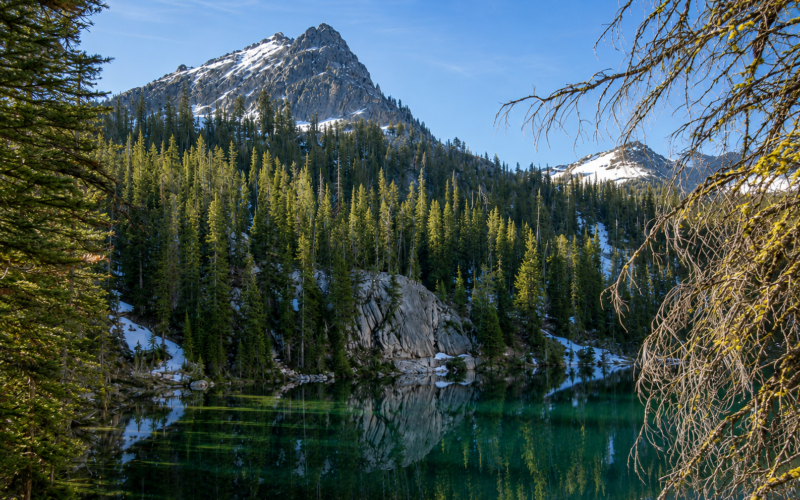
Best Lakes for Idaho Alpine Lake Fly Fishing
These are some top picks for Idaho alpine lake fly fishing, but this list is far from exhaustive. The Sawtooth Wilderness and surrounding recreation area contain hundreds of alpine lakes, many of which support stocked or naturally reproducing trout.
Imogene Lake Fly Fishing
Spanning 76.7 acres in Sawtooth National Recreation Area, Imogene Lake is one of the larger and most impressive Sawtooth lakes for fly fishing. It has been stocked repeatedly with rainbow trout and also supports naturally reproducing brook trout. From Hell Roaring Lake, the Forest Service route continues about 3.2 miles to Imogene Lake. Total mileage varies by starting point, so verify your route before leaving. The action isn’t likely to be nonstop, but Imogene Lake can produce bigger trout than many alpine lakes.
Louie Lake Fly Fishing Near McCall
One of the more accessible alpine lakes in Southwest Idaho, Louie Lake is located just outside McCall. It is reached by a relatively short but steep trail, with mileage varying depending on whether you return directly or continue toward Boulder Lake. Louie Lake spans 24.8 acres and has been stocked with westslope cutthroat trout and golden trout. Some good-sized fish are caught here, and its relative accessibility makes it a prime spot for float tube fishing.
Edna Lake Fly Fishing in the Sawtooths
A 56.6-acre lake within Sawtooth National Recreation Area, Edna Lake is a beautiful alpine lake that has been stocked with rainbow and cutthroat trout. Routes from the Yellowbelly Trailhead pass Yellowbelly, Farley and Edith lakes, but published mileage varies. Verify whether a listed distance is one way or round trip and check current trail conditions before departure. With a rocky bottom and pristine, clear water, Edna Lake is a popular spot for swimming and camping as well as fishing. Try the areas around the inlet and outlet streams that connect it to neighboring Vernon and Virginia lakes.
Lower Glidden Lake Fly Fishing
Lower Glidden Lake is an unusually accessible high-elevation lake reached by a primitive mountain road. At 14.2 acres, it’s a beautiful Idaho Panhandle lake with slightly green-tinted water surrounded by pine-studded mountain slopes. Lower Glidden Lake is consistently stocked with rainbow trout, and wild brook trout are also available. A primitive launch is available for cartop boats, and there’s plenty of backcountry camping in the area. Upper Glidden Lake has also been associated with brook trout and native bull trout. Any bull trout caught must be released immediately, following Idaho’s catch and release requirements.
Goat Lake Fly Fishing Near Stanley
Another outstanding Sawtooth Wilderness lake in Central Idaho, Goat Lake offers excellent alpine trout fishing and stunning scenery. Rugged mountain slopes plunge straight down into this 43.5-acre lake. Idaho Fish and Game has periodically stocked Goat Lake with westslope cutthroat trout. The hike is a hair over 4 miles from the Iron Creek Trailhead, just west of Stanley.
Hazard Lake Fly Fishing Near McCall
One of the most accessible mountain lakes near McCall, Hazard Lake can be reached by road. It offers 63.1 acres of picturesque water in Payette National Forest and supports brook and rainbow trout. Hazard Campground on the south shore offers sites for tents and RVs. No boat ramp is provided, but the lake is well suited to canoes and float tubes.
Idaho Alpine Lake Fly Fishing Tips
Here’s what you need to know to plan an Idaho alpine lake fly fishing adventure.
Best Time for Idaho Alpine Lake Fly Fishing
The fishing season on Idaho’s alpine lakes is relatively brief. Most lakes are locked under ice well into June during an average year. July, August and September are prime months for alpine trout in Idaho, though some lakes may remain fishable into October.
Gear for Alpine Lake Fly Fishing
It’s worth investing in a four-piece rod for backpacking; two-piece rods can be quite cumbersome in the backcountry. For most alpine lakes, a 4- or 5-weight rod works for just about any situation, paired with 5x or 4x leaders and tippet.
For backcountry fishing, carefully consider the weight of your gear and leave anything behind you don’t need. Ultralight tents are ideal for overnight trips, and additional supplies, from extra clothing to backpacking stoves and food, should be as lightweight as possible.
Float tubes are very useful for fishing alpine lakes, allowing anglers to target fish that are often beyond casting distance of shore. Look into ultralight models, like this Outcast OSG Summit model, which tips the scales under 7 pounds.
Approach Clear Alpine Lakes Carefully
Typical high mountain lakes are crystal clear, and trout can see you before you see them. Avoid wearing high-visibility colors, and try to fish from a shady vantage point to remain undetected.
Best Flies for Idaho Alpine Lakes
Trout have a diverse diet in alpine lakes, and most bodies of water provide a wide-ranging biomass that changes with the seasons. Midges tend to make up the bulk of trout diet, followed by caddis, mayflies, scuds, small baitfish, crustaceans and various terrestrial insects.
Many alpine lakes are little-fished, and it’s often true that the trout that live in them seldom see a fly. That doesn’t mean they’ll necessarily strike just anything, but they do tend to be less discerning than their stream-dwelling counterparts.
Ant and Hopper patterns are some of the most consistently effective dry flies, and attractor patterns like a Royal Wulff or Adams often draw trout to the surface in the evening when bugs are hatching. Nymphs perform well too, including Zebra Midge, Copper John and Scud patterns, along with Damselfly and Callibaetis nymphs. Consider a Renegade, a versatile fly pattern that can be fished either dry or wet, and never underestimate the classic Woolly Bugger.
Alpine Lake Fishing Safety
Most alpine lakes in Idaho are not accessible by road. Reaching them is typically possible only on foot or horseback, using trails that gain thousands of feet in elevation and may or may not be well maintained. Be cautious never to overestimate your physical ability or underestimate the importance of backcountry safety.
Always let someone know exactly where you’re going before you leave, and take care to pack necessary emergency and survival equipment. Buy or print a paper map because you probably won’t have cell service. Nights can drop below freezing at any time, so bring layered clothing and an appropriate sleeping bag.
Fishing rules and stocking records can change. Check the current Idaho Fish and Game Fishing Planner and fishing regulations before your trip.