
Offering excellent trout fishing and dramatic mountain scenery, Idaho’s Teton River is one of the most rewarding fly fishing rivers in the Northwest. Not to be confused with Montana’s Teton River, this eastern Idaho fishery is sometimes overlooked because it is a tributary of the much more famous Henry’s Fork of the Snake River.
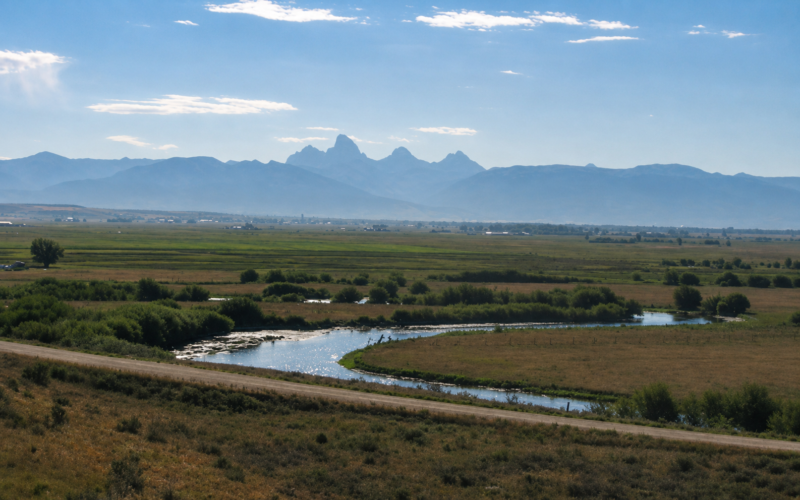
The Teton River flows approximately 82 miles through eastern Idaho, draining the west slope of the Teton Range. It changes character several times as it flows north and west, beginning as a spring-influenced meadow stream before entering rugged freestone canyon water and eventually spreading across the Snake River Plain. The variety creates opportunities for dry fly fishing, nymphing, wading and floating.
Teton River Trout Species
Yellowstone cutthroat trout are the signature native trout of the Teton River. Many cutthroats measure 12 to 16 inches, with larger fish also possible. Rainbow trout, brook trout and rainbow-cutthroat hybrids, commonly called cutbows, occur in the drainage as well. Regulations are designed in part to protect native cutthroat, so anglers should check the current Idaho Fish and Game rules before keeping any fish.
Teton River Fishing Sections and Access Points
The Teton River is generally divided into three sections: the upper meadow river, the Teton River Canyon and the lower river on the Snake River Plain. Each section has multiple access points; however, it is essential to note that a significant portion of the land along the Teton River is privately owned.
Once legally on a navigable section, anglers generally may remain below the ordinary high-water mark. That does not authorize crossing private land to reach the river, so use established public access sites and never cross private property without permission. Floating is a popular way to cover more water. Rafts and other shallow-draft craft are often better suited than traditional wooden drift boats to the river’s rocky, shallow reaches. Access, obstacles and flows can change, so verify current conditions locally before launching.
Upper Teton River Fly Fishing and Access
The Upper Teton River is a classic meadow stream, meandering between grassy banks with mountains providing a dramatic backdrop. Partially spring-fed, it’s very reminiscent of the Railroad Ranch section of the Henry’s Fork. Except for the window in late spring when it gets blown out by runoff from the Teton Mountains, this section is generally placid and slow-moving, and it offers excellent dry fly fishing.
This is also the most fished section of the river, and it offers the best wading access. The majority of the land along the Upper Teton is privately owned, but there are several excellent access points. The Fox Creek East and Fox Creek West access sites are the uppermost access sites, both suitable for launching small boats. Additional access points are mostly at bridge crossings, including Bates Bridge and South Bates Bridge, Horseshoe Bridge and Packsaddle Bridge. Harrop’s Bridge on Route 33 is the final access on this section.
Fishing the Teton River Canyon
Not far below Harrop’s Bridge, the river enters the Teton River Canyon. This stretch is often swift and challenging, tumbling through a series of Class III and IV rapids between steep canyon walls. Access is limited, and floating this section should only be done by experienced whitewater rafters, ideally in the presence of a knowledgeable local guide.
Quieter reaches between the rapids hold trout, but the canyon is not a casual fishing float. Technical sections require specialized whitewater equipment, advanced rowing skills and intimate knowledge of the route. Conventional drift boats are not appropriate for the most demanding reaches. Limited foot access is available near the former Felt Dam site at the upper end of the canyon and near Bitch Creek, where the steep access trail presents its own hazards. Anglers unfamiliar with the canyon should hire an experienced local outfitter.
Lower Teton River on the Snake River Plain
The Teton River exits the canyon through the former Teton Dam site. Here it widens significantly and, somewhat unusually, splits into North and South Forks as it meanders across the broad Snake River Plain toward its confluence with Henry’s Fork of the Snake River. Much of this section offers excellent fly fishing and float conditions, though the land bordering the river is almost entirely private, which limits access to the dam site itself and several bridge crossings.
Best Time to Fly Fish the Teton River
The most dependable fishing usually begins after spring runoff starts to clear, often in late June, and continues through early fall. July brings major aquatic insect activity, while August favors terrestrials such as grasshoppers and ants. September and early October can offer lower flows, fewer anglers and strong mayfly fishing. Conditions vary by year, so check flows, weather and a current local report before traveling.
Teton River Regulations and Safety
Idaho Fish and Game lists the Teton River as open year-round unless special rules apply. Regulations can change, and different reaches may have rules intended to protect native Yellowstone cutthroat trout. Carry a current Idaho fishing license, confirm harvest and tackle requirements, and respect all posted closures. The canyon contains serious whitewater, while cold water, changing flows, private land and limited exits create additional hazards throughout the river.
Seasonal Teton River Hatch Guide and Best Flies
The Teton River supports diverse insect life because its meadow, canyon and lower-river sections provide different habitats. Hatch timing varies by section, elevation, runoff and water temperature, so treat seasonal dates as a general guide and check a current local fishing report before selecting flies.
Seasonal Teton River Hatch Guide
Blue-winged olives are most reliable during spring and fall, particularly from March into April and again in September and October. Pale Morning Duns are among the most important summer mayflies. Depending on the section and conditions, anglers may also encounter Yellow Quills, Mahogany Duns, Green Drakes, Small Western Green Drakes, Brown Drakes, Tricos and fall Gray Drakes.
Caddis activity includes Spotted Sedges, Green Sedges, Little Black Caddis and October Caddis. The spring Mother’s Day Caddis hatch can provide early-season action. Salmonflies and Golden Stoneflies typically become important as runoff subsides in June and early July, followed by smaller Yellow Sallies during summer. Exact timing changes from year to year.
Best Teton River Fly Patterns and Techniques
Mayfly imitations, especially BWO and PMD patterns, belong in every Teton River fly box. Rusty Spinners, which imitate spent mayflies, are also productive when mayflies are hatching. Match fly size and profile to the insects on the water, particularly when trout become selective in the slow upper river.
Stimulators and general Attractor flies like Royal Wulffs and Parachute Adams can also be effective, and big Chubby Chernobyl flies in various colors work wonders during Salmonfly and Stonefly hatches. On the nymphing side, Pat’s Rubber Legs, Golden Stones and Pheasant Tail Nymphs are all good choices.
Terrestrials become increasingly important during summer. The Teton is particularly well suited to hopper-dropper fishing in the upper meadow sections, where grasshoppers and other land-based insects frequently fall from grassy banks.
A basic hopper-dropper rig uses a large, buoyant dry fly with a nymph suspended 12 to 24 inches below it. Adjust the dropper length for water depth and trout behavior. Present the rig along foam lines and current seams, or float it along grassy banks.